

Greek Island Cruises From the UK
What you need to know before you book
Most families who think about Greece picture the same thing: a week on one island, maybe two, staying in an apartment, perhaps moving between hotels. It's a perfectly good holiday. But it's also a lot of organising — ferries, transfers, different check-ins — with children in tow.
What changes when you do it by cruise is surprisingly simple: you unpack once, and Greece comes to you.
We've sailed into Corfu, Katakolon, Santorini and Athens on MSC cruises, and we've also explored Mykonos and Santorini independently by ferry from Athens — so we know the region from more than one angle. When clients ask us about Greek island cruises from the UK, we can give them an honest answer rather than a brochure one. Here's what we'd actually tell you.
Why a Cruise Works Particularly Well in Greece
The Greek islands are famously scattered — there are over 200 inhabited ones, spread across a wide stretch of the Aegean and Ionian seas. Visiting more than two or three independently means juggling ferry timetables, different hotels, and a lot of luggage movement. A cruise solves all of that. You unpack once, wake up in a different port each morning, and spend your days ashore rather than in transit.
The other advantage is the season. The Greek islands are at their best from late April through to October, which maps almost perfectly onto the Mediterranean cruise calendar. That gives you a long window to choose from — whether you want the buzz of peak summer or the quieter, slightly cooler shoulder months, which we'd often recommend for a more relaxed experience ashore.
For families especially, the format removes a layer of logistical pressure that can quietly drain the enjoyment out of a trip — no negotiating ferry times with tired children, no dragging suitcases across cobblestones between hotels.
The Islands — What Each One Actually Offers
Corfu is often the greenest and most lush of the Greek islands — heavily influenced by its Venetian history, with an elegant old town that's a UNESCO World Heritage Site. It's a good port for those who enjoy wandering, good food, and architecture as much as beaches. We found it one of the most immediately charming stops on our cruise. It's also one of the more relaxed ports for families — easy to explore on foot, with good options close to the dock.
Katakolon is a smaller, quieter port — most people use it as a jumping-off point for ancient Olympia, the original site of the Olympic Games. If you have any interest in ancient history, this excursion is genuinely worth doing. The site itself is atmospheric in a way that photographs don't quite capture.
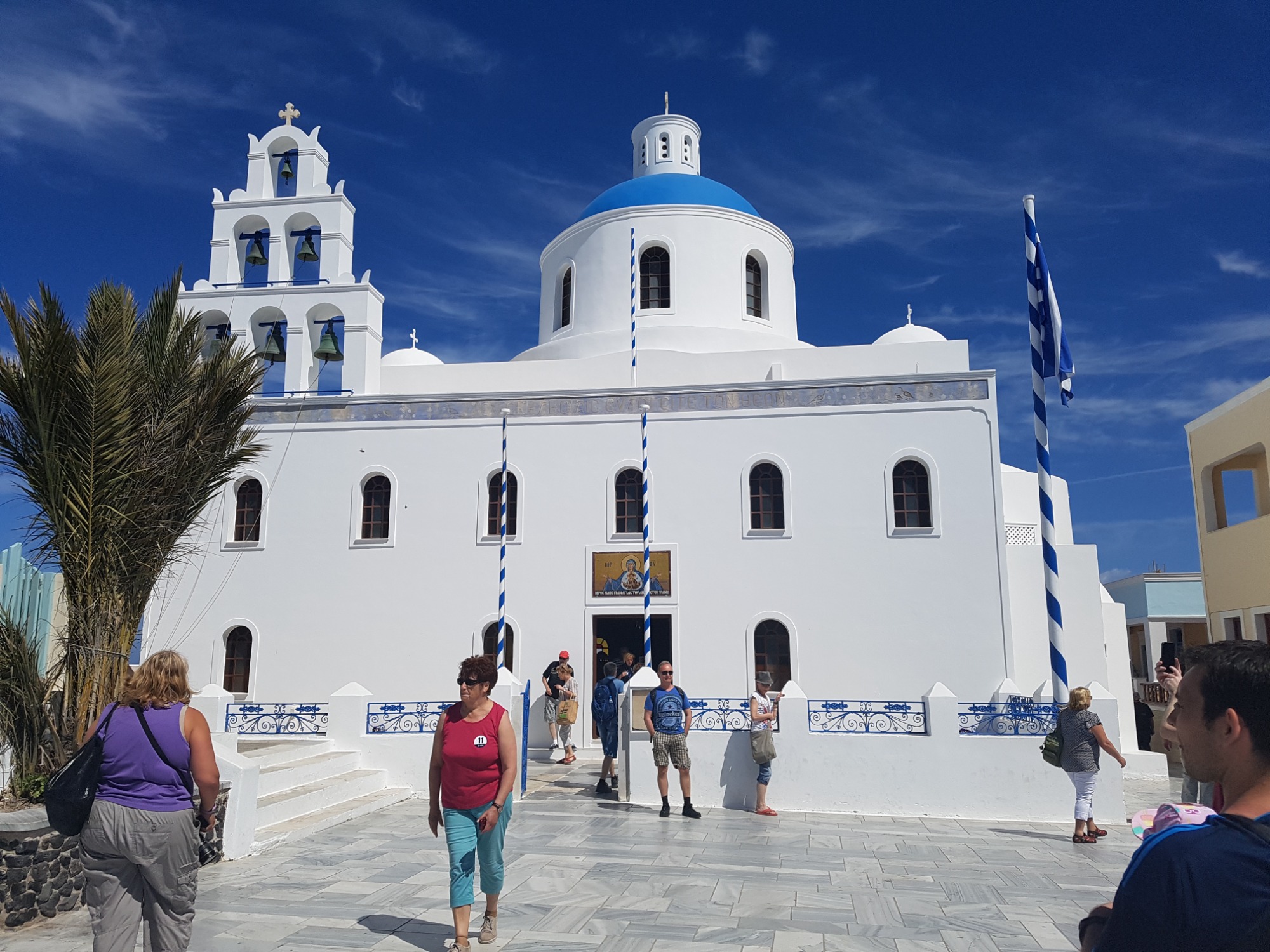
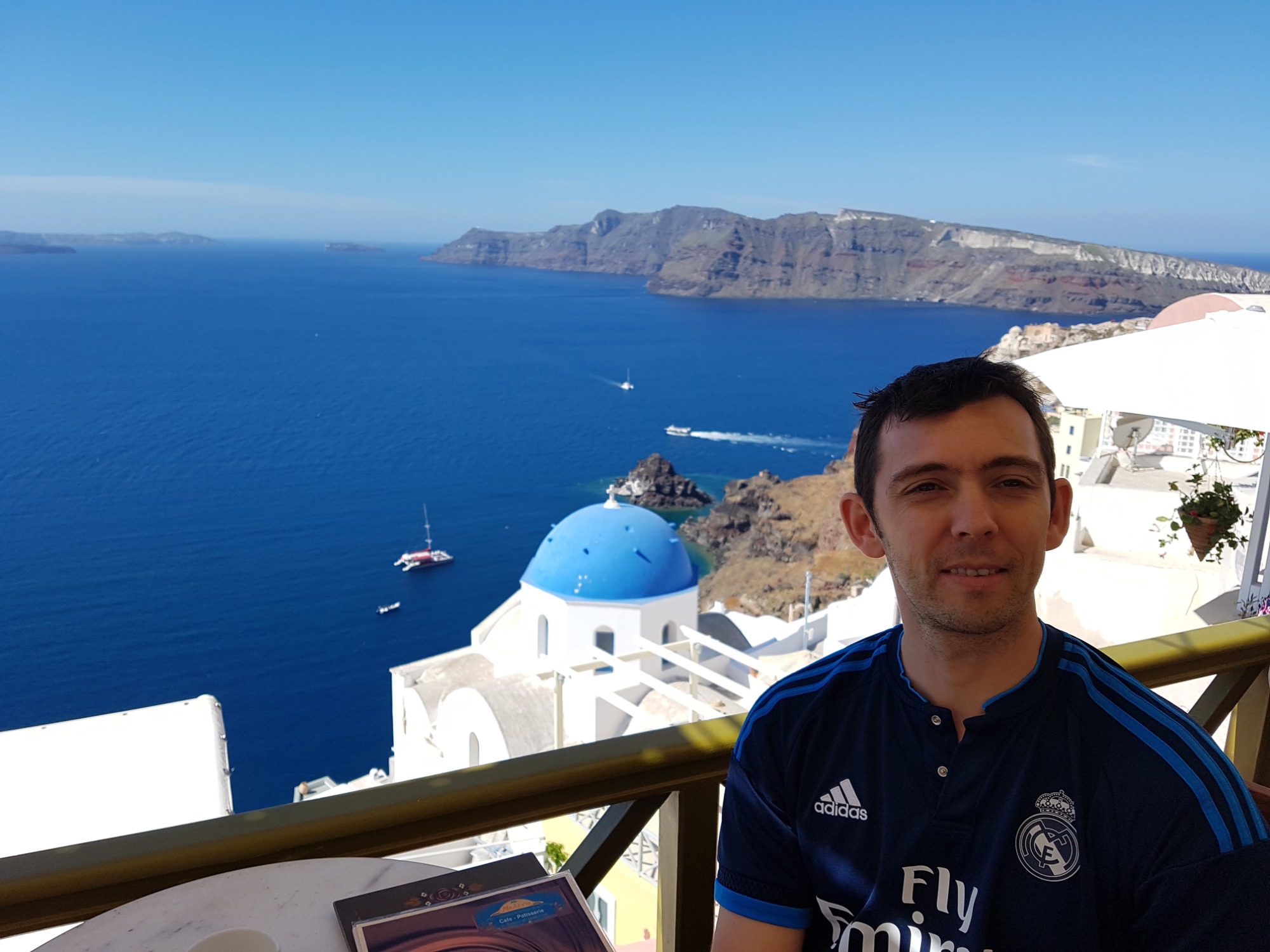
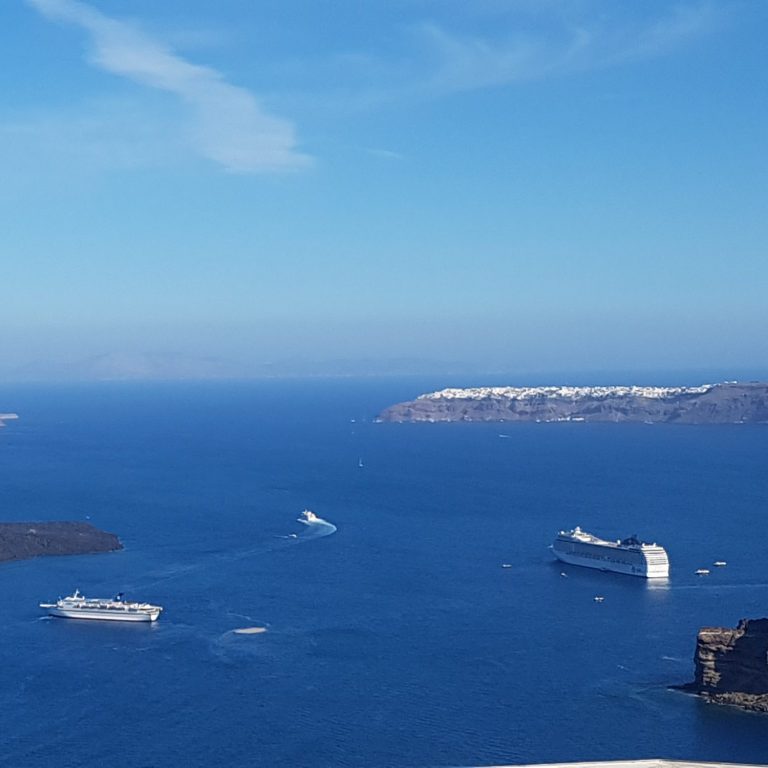
Santorini is the one everyone has seen in pictures — the white and blue buildings clinging to the caldera rim, the sunsets over Oia. It lives up to the image, but it's worth knowing that Santorini is a tender port, meaning the ship anchors offshore and passengers are ferried in by smaller boats. This can mean queues, particularly in peak season. Going early or booking a ship excursion that gives you priority tendering makes a real difference. We've also visited independently by ferry from Athens — the approach by sea, watching the caldera come into view, is one of those travel moments that stays with you.
Athens (Piraeus) is typically an embarkation or disembarkation port rather than a day stop, but it's worth building in extra time here if you can. The Acropolis and the National Archaeological Museum alone justify a full day, and the Plaka neighbourhood at the foot of the hill is a very pleasant place to spend an evening — good food, manageable streets, unhurried pace. Our other half spent a week in Athens before we even met — and still talks about it as one of the best trips he's taken. It's a city that rewards slowing down.
Mykonos divides opinion, and it wasn't actually the island I was most excited about — Santorini had always been the one on my list. The caldera, the sunsets over Oia — that was the dream, and it didn't disappoint.
But when I visited both islands independently — three days each, arriving by ferry from Athens — it was Mykonos that caught me off guard.
It wasn't the scenery, because both islands are genuinely beautiful. It was the energy. There's something about the atmosphere in Mykonos that's difficult to put into words — it just feels alive in a way that stays with you.
For families, it's worth knowing that Mykonos skews toward an adult crowd — which doesn't make it a bad choice, but it does affect how you plan your time ashore.
Rhodes is one of the most historically rich islands in Greece — the medieval old town, built by the Knights of St John, is remarkably well preserved and still very much lived-in. People actually live and work within those walls, which gives it a completely different feel to a purely preserved historic site — it's not a museum, it's a place.
It's also one of the few Greek island ports where large ships can dock directly, which means no tender boats and a much smoother arrival. And because it's one of the larger islands, there's enough to fill a proper full day ashore — history, beaches, good food — without feeling like you've rushed through it.
What to Think About Choosing Your Cruise
Duration matters more than people expect. A 7-night cruise typically visits three or four islands — enough to get a real feel for the region without it feeling rushed. Longer itineraries of 10 to 14 nights can take in a wider spread, sometimes combining Greek islands with Turkey, Croatia, or Montenegro.
Departure port is a practical consideration. Flying to Rome or Athens to join a Mediterranean cruise opens up a wider range of itineraries — and for families, this is usually the better route. Sailing from Southampton is an option, but it's worth knowing that the cruise lines operating from there — P&O, Ambassador and Cunard — tend to run adult-oriented or adult-only ships. If you're travelling as a family, flying to join your cruise in Athens or Rome will give you significantly more choice, and MSC in particular has strong family itineraries from both ports.
Ship size is worth thinking about for Santorini specifically. The island has strict limits on how many cruise passengers can come ashore on any given day, and larger ships can mean longer waits for tender boats. A mid-sized ship often gives you a smoother experience at the more sensitive ports.
Time of year shapes the whole trip. May, June and September tend to offer warm weather, manageable crowds, and often better pricing. July and August are peak season — hotter, busier, and more expensive, though the atmosphere is undeniably vibrant.
Travelling With Children
If you're cruising with kids, Greek island itineraries work particularly well because the ports are varied enough to hold everyone's attention — history for the curious ones, beaches for the ones who just want to be in the water. MSC in particular has strong family facilities onboard, which means sea days and evenings are as well-catered for as the port days themselves. It's worth thinking about the kids club registration on embarkation day — queues build quickly, and getting it sorted early makes the rest of the cruise run more smoothly.
Why We Often Recommend MSC for Greek Island Cruises
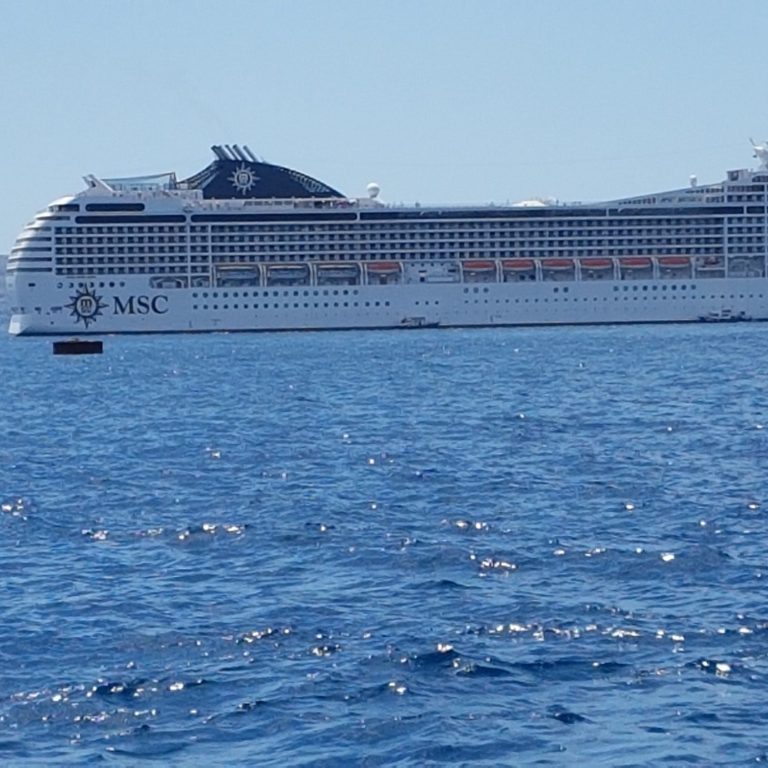
MSC has one of the strongest Mediterranean programmes of any cruise line available to UK travellers, and for Greek island itineraries in particular they tend to use smaller ships. That's not a coincidence — several Greek ports, including Santorini, limit how many cruise passengers can come ashore at any one time, and a smaller ship simply makes the whole experience smoother, both on the tender and once you're ashore.
For families, the ship size question matters in another way too — a mid-sized ship tends to feel less overwhelming for children, and MSC's family programme on these itineraries is genuinely one of the strongest in the market.
As an MSC specialist agency, we're able to offer our clients better value than booking direct — and more importantly, we know these itineraries from personal experience. Ships like MSC Orchestra, MSC Splendida, MSC Fantasia and MSC Sinfonia sail Greek island itineraries from Athens (Piraeus), while MSC Divina does similar routes from Rome (Civitavecchia) — so there are good options whether you'd rather fly into Greece or Italy to join your cruise. We can also advise on Voyagers Club membership and how to make the most of it.
If you're weighing up options, it's worth a conversation before you commit.
One Thing Worth Knowing Before You Book
Since July 2025, the Greek Government has introduced a cruise passenger fee as part of its Sustainable Tourism Programme. The amount varies depending on which ports you're visiting and the time of year — with Mykonos and Santorini carrying a higher charge than other Greek ports, and peak summer being the most expensive period.
It's worth factoring this into your overall budget when comparing itineraries, and confirming how it's handled with whichever cruise line you're booking with.
Thinking About a Greek Island Cruise?
If you're considering it, we're happy to talk through the options — which itinerary suits your dates, which ship fits your style, and whether flying to join your cruise makes more sense for you.
There's no pressure and no obligation. Just get in touch and we'll take it from there.
Evhiz Travel | Bilingual Bespoke Holidays & Cruises | ATOL Protected 12564 | IATA 96154236 | PTS 6090